
Are probiotics helpful or harmful when treating SIBO?
For years, the advice was to avoid probiotics if you have small intestinal bacterial overgrowth (SIBO). But new research is challenging that belief. Certain probiotic strains can actually help reduce bacterial overgrowth, support gut healing, and even improve symptoms like bloating and constipation, sometimes with results comparable to antibiotics.
In this article, we’ll break down the evidence, the best probiotic strains for SIBO, and when to proceed with caution.
Quick Answer: Are Probiotics Helpful for SIBO?
Yes! Certain probiotic strains have been shown to reduce SIBO symptoms and bacterial overgrowth, with some studies reporting success rates similar to antibiotics. The key is using clinically proven strains like Lactobacillus plantarum, Bifidobacterium lactis, or Saccharomyces boulardii.
What is SIBO?
Small intestinal bacterial overgrowth (SIBO) is a common gut imbalance where bacteria build up in the small intestine, leading to bloating, gas, burping, and changes in bowel habits, from constipation to diarrhoea.
In this article, we’ll explore how probiotics can help (or harm) during SIBO treatment. For a deep dive into causes, testing, and treatment strategies, see The Complete Guide to SIBO below.
Really, this article is intended for people that have read, heard on podcasts or have been told by their practitioner that probiotics can’t be used in SIBO treatment. I feel that the story is slowly changing, but I still frequently hear this from new patients at the Byron Herbalist clinic.
Probiotics For Gut Health
While we won’t be covering the nuanced details of how probiotics beneficially influence gut health, we will cover some of the basics.
First off a definition. Probiotics are defined as ‘live microorganisms that, when administered in adequate amounts, confer a health benefit on the host’ (1).
Now that we have a working definition let’s jump into some basics of how probiotics can beneficially impact our gut health.
Antimicrobial Actions of Probiotics
Probiotics are antimicrobial in their own weird and wonderful way.
A term called competitive exclusion outlines a number of methods that probiotics use to deter bacterial infections and overgrowths. These methods include the production of bacteriocins, competition for nutrients and reducing the luminal pH (2).
Let’s focus on bacteriocin production for a moment.
Certain probiotics can manufacture what are known as bacteriocins. These antimicrobial peptides consist of 30 to 60 amino acids and target specific bacterial overgrowths and infections (2).
There are a number of great examples of targeted bacteriocin production from different Lactobacillus species including studies showing action against the following species of bacteria (3).
Benefits of Probiotics on Leaky Gut
Speaking broadly, the jury is still out as to which probiotics can improve leaky gut and how good they are at doing it. Some studies show benefit while others don’t. There is a good foundation of preclinical data but more human trials are needed.
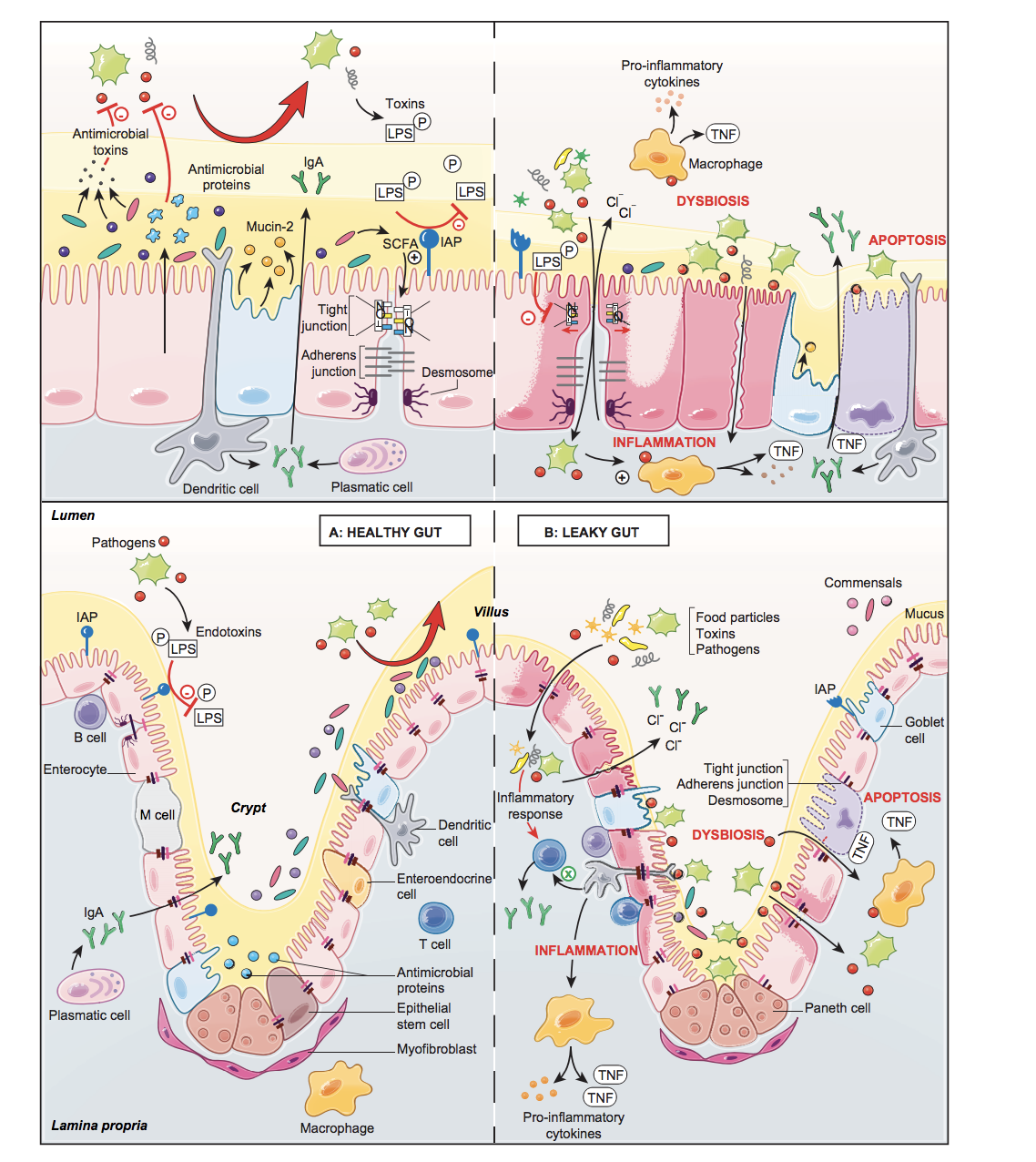
With that said we do have good human research showing benefit from some probiotic species in healing leaky gut.
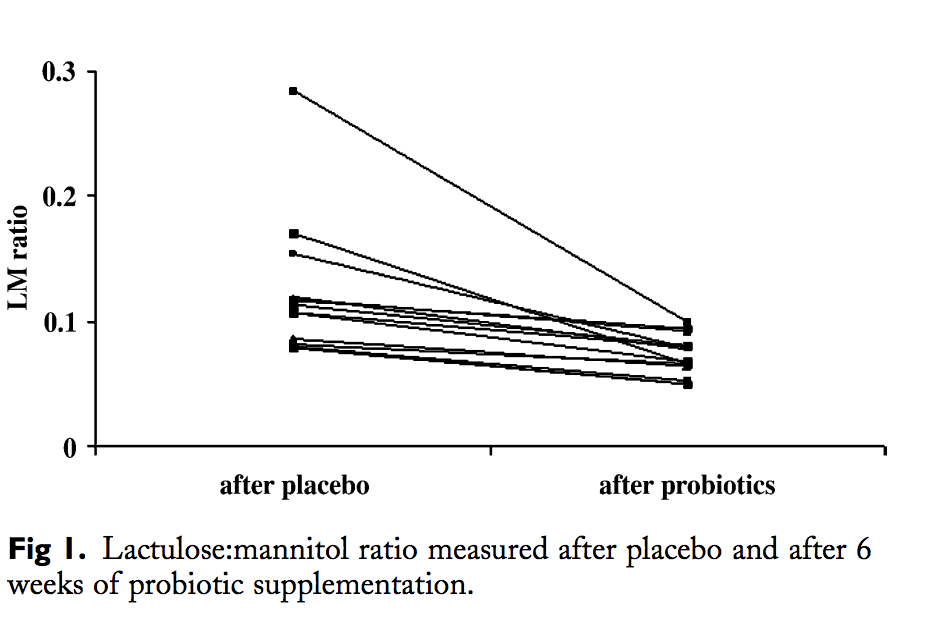
While all of the above consists of clinical studies in humans (the best research we have to draw from) there is ample pre-clinical evidence supporting the use of Saccharomyces boulardii in leaky gut.
This beneficial yeast is helpful in a range of gut conditions. The table below outlines some beneficial impacts Saccharomyces boulardii has shown in pre-clinical studies.
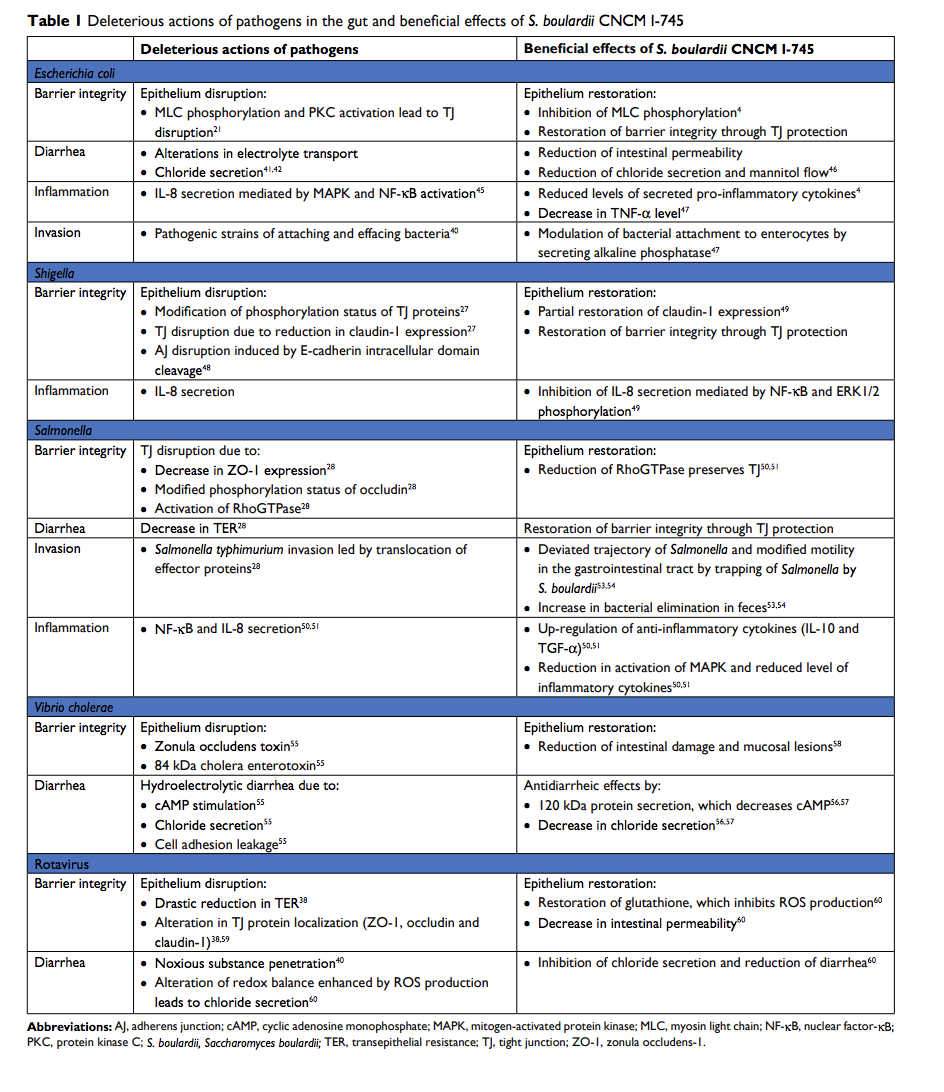
Saccharomyces boulardii has been shown to help with the following (8).
Different Types of Probiotics
Probiotics come in a range of different shapes and forms.
Popular and well studied probiotic bacteria include species of Lactobacillus and Bifidobacteria. Escherichia coli Nissle 1917 is a third, well studied bacterial probiotic. We also have the widely used beneficial yeast Saccharomyces boulardii. Finally spore based probiotics, often referred to as soil based probiotics are becoming more widely studied (9).
Which of these probiotics are helpful in SIBO? Let’s get to that now!
Probiotics For SIBO
So what does the research tell us about probiotics for small intestinal bacterial overgrowth? This is the big question. Are probiotics helpful in SIBO treatments?
A resounding yes!
A systematic review with meta-analysis of human trials – the best science we have – was published in the Journal of Clinical Gastroenterology in 2017. It showed that probiotics alone led to successful SIBO decontamination in 53.2% of patients (10).
From the study
‘In the case of patients suffering from SIBO, the treatment efficacy of probiotics was remarkable. The SIBO decontamination rate achieved with probiotics alone was 53.2%, which was comparable to that observed in a meta analysis on antibiotics (51.1%).’
Probiotics for Preventing and Treating Small Intestinal Bacterial Overgrowth A Meta-Analysis and Systematic Review of Current Evidence
I would hate to be accused of cherry picking the data so let’s get something out of the way up front.
Not every study included in the systemic review found probiotics to be helpful in SIBO.
Let’s dive into some of the studies.
Lactobacillus and Bifidobacteria Probiotics for SIBO
One study evaluated the effects of a 6 species probiotic with Lactobacillus and Bifidobacteria species and an added Streptococcus thermophilus probiotic on patients with liver disease and SIBO (11).
The blend contained the following species of probiotics.
They found that SIBO was improved in 24% of patients and in none of the placebo group.
I often recommend different probiotics for methane SIBO as well as customised herbs and prebiotics too. For more info on methane SIBO see our started guide here.
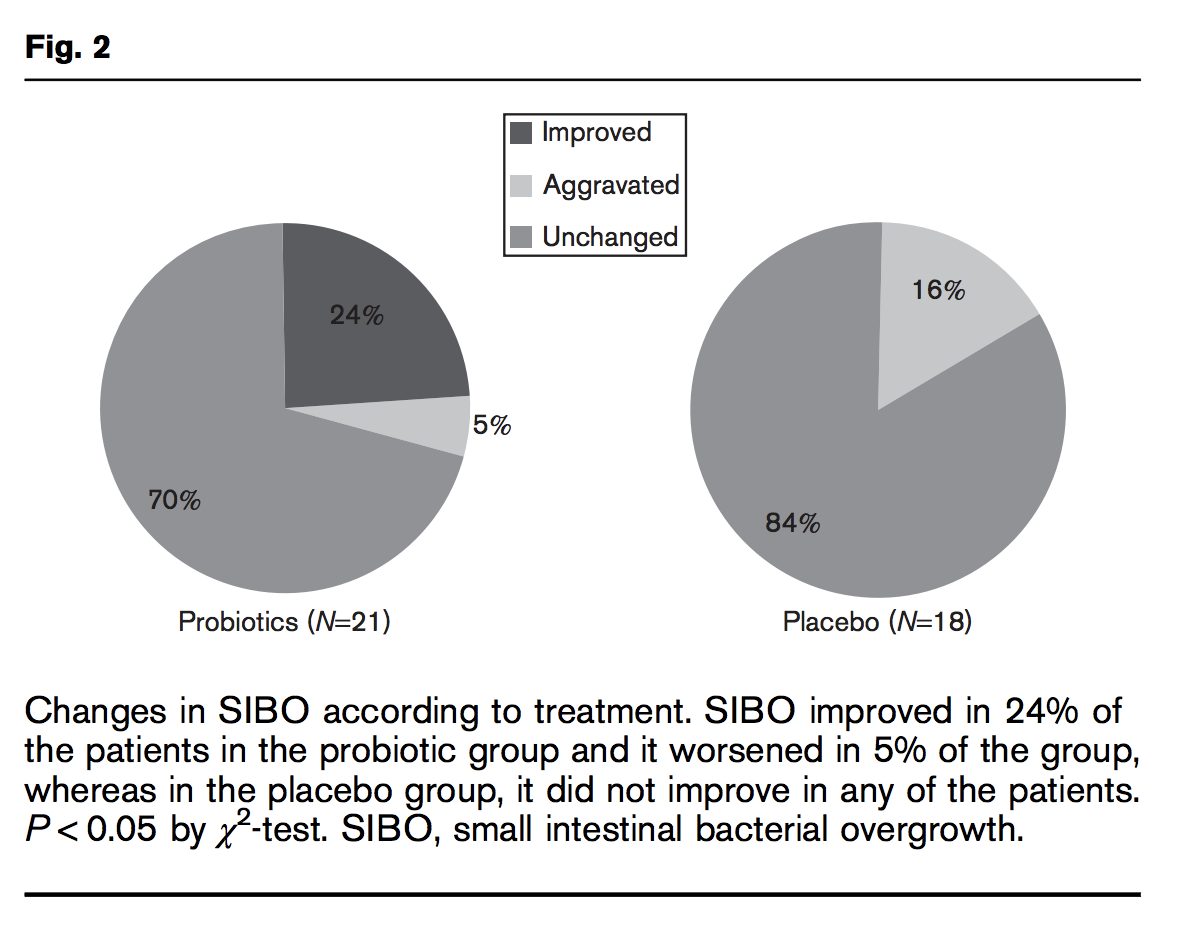
Image taken from – Short-term probiotic therapy alleviates small intestinal bacterial overgrowth, but does not improve intestinal permeability in chronic liver disease
Yakult Probiotic and SIBO
In a small study the strain Lactobacillus casei strain Shirota known as Yakult was found to clear SIBO in 64% of patients. Taking 1 bottle of Yakult daily for 6 weeks pushed the median time of the hydrogen spike (proximal fermentation time) back from 45 minutes to 75 minutes (12).
Mixing in Saccharomyces boulardii for SIBO treatment
In another study a blend of bifidobacteria and lactobacilli species along with the beneficial yeast Saccharomyces boulardii were assessed for SIBO and IBS treatment (13).
The blend consisted of a number of well researched strains including

The study was a bit unusual as it was looking at the overlap between SIBO and IBS. They found a significant improvement in IBS symptoms in the patients that had SIBO after taking the probiotic blend above compared to the IBS patients without SIBO who also took the probiotics. Again it was a small study so we need to keep this in mind. Each patient in the study that did have SIBO had at least a 50% improvement in their symptoms after 30 days on the probiotics.
The study also found a significant improvement in bristol stool types in the constipated IBS patients after the probiotic intervention.
Spore Based Probiotics For SIBO
Spore based probiotics are the new kids on the block. I have seen some pretty remarkable results using probiotics like Megaspore in certain SIBO patients.
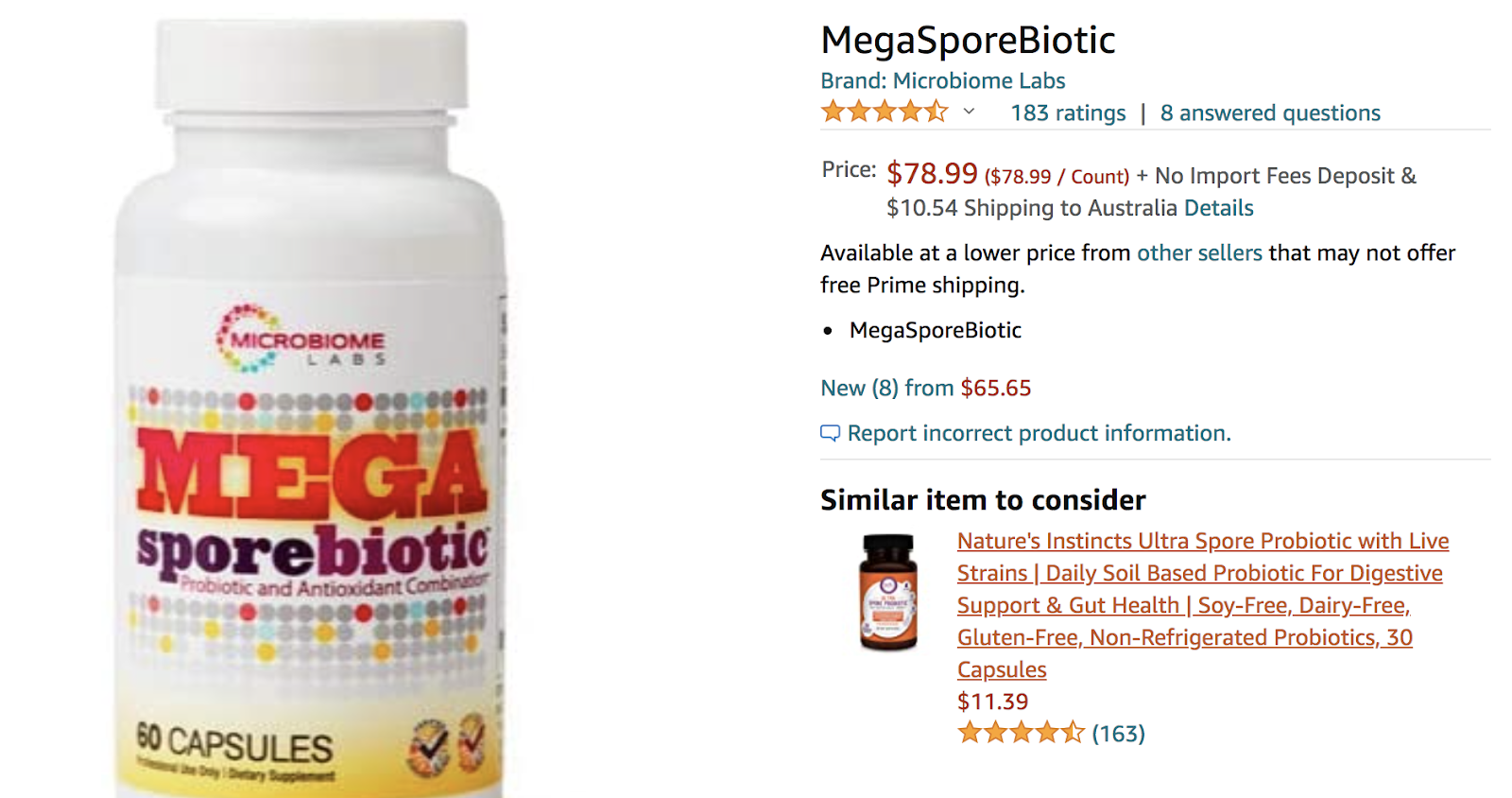
One thing that I will mention before we dig into the spore based studies is that some people will need to take it low and slow with this particular class of probiotics. Some feedback from the more sensitive patients include abdominal pain, trapped gas and even loose stools. If you do trial spore based probiotics take it slow and gradually build up to the therapeutic dose over time, particularly if you are sensitive and tend to react to new therapeutics.
Bacillus Species
One study took patients with SIBO (defined as an increase in 12ppm on a glucose breath test). Each patient received 1 capsule, three times daily containing 2 billion CFUs of Bacillus clausii for one month. Using the glucose breath test on follow up they found a normalisation of 47% from just the single strain intervention.
Bacillus clausii has been shown to impact the gut in the following ways (14).
- Adhere to the intestinal wall
- Secrete antimicrobial peptides against gram positive bacteria
- Resist common antibiotics
Another study assessing probiotics for SIBO used a spore based species called Bacillus coagulan. Instead of trialling probiotics alone they used this particular spore based probiotic as a maintenance treatment after aggressive antibiotic interventions. When the results were tallied 93.3% of the probiotics post antibiotic group had negative SIBO breath tests whereas only 66.7% of the antibiotics alone group had negative breath testing (15).
Case Study: How Saccharomyces boulardii Helped Stop Diarrhoea from SIBO
One of my patients, a 35-year-old woman, came to me exhausted from months of bloating, urgency, and racing to the bathroom 3–4 times a day. Her breath test showed hydrogen-dominant SIBO.
Instead of starting with a standard bacterial probiotic, I used Saccharomyces boulardii, a beneficial yeast that can calm loose bowels and protect the gut lining. We paired this with a low-FODMAP approach, gentle antimicrobials in a herbal tincture and strong digestive enzymes.
Within 30 days, she went from constant diarrhoea to just one or two formed bowel movements a day. Her bloating improved, and she could finally leave the house without fear of sudden urgency.
Why it worked: SB doesn’t feed SIBO bacteria and has solid research for repairing the gut barrier and reducing inflammation.
Final Thoughts: Should You Use Probiotics for SIBO?
In the Byron Herbalist clinic, SIBO is by far the most common digestive disorder I see, and probiotic therapy is part of nearly every treatment plan. I select strains based on each patient’s symptoms, lab results, and history, but I rarely find a case where probiotics aren’t helpful. I’ll use them for slow motility (a common root cause for SIBO), as antimicrobials and to heal the gut lining too. Often I’ll pair them with herbal medicine for SIBO, either antimicrobials or motility herbs if indicated.
Occasionally, a patient may react to a specific probiotic blend (e.g., more bloating, loose stools, or mild discomfort). This is why working with a gut health professional matters, it allows for fine-tuning, adjusting strains, and achieving the best results with minimal side effects.

References and Resources
- The International Scientific Association for Probiotics and Prebiotics consensus statement on the scope and appropriate use of the term probiotic
- Mechanisms of Action of Probiotics
- Antimicrobial effects of lactobacillus plantarum and lactobacillus acidophilus against multidrug-resistant enteroaggregative escherichia coli
- The effects of perioperative probiotic treatment on serum zonulin concentration and subsequent postoperative infectious complications after colorectal cancer surgery: a double-center and double-blind randomized clinical trial
- Effect of probiotics on gastrointestinal symptoms and small intestinal permeability in children with atopic dermatitis
- Immune Response and Intestinal Permeability in Children With Acute Gastroenteritis Treated With Lactobacillus rhamnosus GG: A Randomized, Double-Blind, Placebo-Controlled Trial
- Influence of Saccharomyces boulardii on the intestinal permeability of patients with Crohn’s disease in remission
- Beneficial effects of Saccharomyces boulardii CNCM I-745 on clinical disorders associated with intestinal barrier disruption
- Probiotics, Immune Function, Infection and Inflammation: A Review of the Evidence from Studies Conducted in Humans
- Probiotics for Preventing and Treating Small Intestinal Bacterial Overgrowth A Meta-Analysis and Systematic Review of Current Evidence
- Short-term probiotic therapy alleviates small intestinal bacterial overgrowth, but does not improve intestinal permeability in chronic liver disease
- Probiotic effects on intestinal fermentation patterns in patients with irritable bowel syndrome
- Effect of a Preparation of Four Probiotics on Symptoms of Patients with Irritable Bowel Syndrome: Association with Intestinal Bacterial Overgrowth
- Bacillus clausii as a Treatment of Small Intestinal Bacterial Overgrowth
- Evaluating the efficacy of probiotic on treatment in patients with small intestinal bacterial overgrowth (SIBO) – A pilot study


15 comments
Hi Todd,
Forgive this improper way of contacting you but I live in Italy and I have been struggling with sibo and other GI issues that sibo caused me for two years, after pelvic surgery. I have been misdiagnosed so many times and given so many wrong therapies, finally I’ve found a dietician who at least knows of the condition (it’s basically unknown here) amd she gave me 500mg of berberine hcl to take daily for 2 months (I am hydrogen prevalent, methane only secondarily) but no probiotics to go with it. I’ve been taking it for 15 days and I am noticing a lot more bloating and other nasty intestinal symptoms. I am left wondering if it’s because I am not taking probiotics with it, I really wouldn’t want to impoverish my already weakened gut flora to no repair. Would you add probiotics during treatment? Or after? If so, can you at least direct me towards a type or two? I am so scared of going DYI but I can’t seem to find any professional help, believe me I tried so many times.
Again, I am extremely sorry to bother you this way but I am out of my dephts and so depressed about it all, I am young and this is ruining my life :(
If you could please give me a tip or two about this I would be forever grateful.
Thank you very much.
Hi Lucrezia, thanks for your patience in my response. I have found it can be a trial and error with probiotics in certain SIBO patients. The saccharomyces boulardii probiotic can be helpful with hydrogen dominant SIBO as can the bacillus probiotics (megaspore is great in certain cases). Some patients cannot tolerate ANY probiotics (makes them feel worse) but this is generally the exception in my experience.
Really hope it helps! I wish I could take on international patients but the timezones are a real killer and the postage to get patients the proper herbs is far too cost prohibitive.
Hope you find the support you need!
Hello
I had spine surgery with implants. After 1 year, I had high crp and brain fog cause various tests and could not figure out. Until yesterday, I had H2 sibo 40sh ppm. Is the surgery cause What do you recommend ?
Hi Todd,
I’m new to the SIBO world so I’ve been reading your website a lot. Thanks for all the information!
I was recently diagnosed with hydrogen-predominant SIBO after the Lactulose breath test (the glucose one came back negative).
My gastroenterologist in my home country recommended I take Bacillus Clausii 2 billion (Enterogermina) while doing the SIBO treatment and I can’t seem to find it in Australia. Do you have any idea where I could get this? Or if it is sold under other names here?
Thank you very much.
Hi Emilia, there is a product called megaspore that is available for purchase in Australia. It contains a number of Bacillus species and can be helpful for SIBO treatment in some patients.
Best,
Todd
These articles are fantastic. Wish you worked with clients in the United States. Maybe could use fullscript as on online dispensary? Let me know if anything changes (or if you are able to do case reviews over email or a zoom call). Would love to be able to send you some test results and hear your ideas.
Hi Dienna, Thanks for your comment. At the moment we are only working with Australians and New Zealanders. There wasn’t a great option for insurance cover for North America plus I use very specific and uncommon whole herbs to treat my patients. Working with international patients never goes well as they can’t access what I recommend for a reasonable price. I wish I had a good referral too but haven’t found anyone that has a similar model in the states. Sorry, not the best reply!
Best,
Todd
Hi, is it better to take multiple probiotics so if you are doing well with Saccharomyces Boulardii to bring in another? Do you just follow the recommended dose or do more when dealing with sibi/parasites and how long do you stay on them?
Hi Byron
Can probiotic implant via colonic help SIBO patients?
I have extreme bloating with most complex carbohydrates and many fruits and vegetables too and diary.
• Can probiotic implant of below strain help me:
• Bifidobacterium spp
• Lactobacillus plantarum (Lp)
• Bacillus subtilis
Can a patient with candida take saccharomyces cerevisiae? I have geotrichium candida.
I have been on too many antibiotics for UTI tht caused dysbiosis.
Can you advise please.
Probiotics can be helpful. I often combine them with herbs and prebiotic fibres. Sometimes I recommend digestive enzymes to help with bloating too!
Fantastic post and so helpful, thank you so much for sharing your expertise. My doctor put me on some Ortho Molecular products for digestive issues (available through physicians). She had me start with SBI Protect and digestive enzymes, which helped to normalize my gut symptoms (IBS-D and/or SIBO). After a few days of those products, she had me add a probiotic with several different strains (again, from Ortho Molecular) and I started having a return of the old symptoms — loose stools in the a.m. — all over again. It’s been several days, and I am now wondering if I am one of those people who shouldn’t take probiotics. I had been trying OTC probiotics over the years without much improvement, and hoped that the “medical grade” probiotic would be different. My question: Is there an adjustment period for starting probiotics? How long should you try them before you stop because of a return of old symptoms? My doctor seems to think this might be a “cleanse” or die-off reaction (??)
Probiotics actually gave me Sibo. There was also a study done in 2018 where probiotics helped about 50% of the people with Sibo but they also found out that probiotics could also induce Sibo in others.
I also believe that taking probiotics gave me sibo. Makes me very weary of trying them again to resolve it. I know when I went through a holistic MD lead treatment, she only introduced probiotics (megaspore) after many months of other natural supplements and antimicrobials. I’ve been struggling with hydrogen sibo for over 5 years now. Lots of money and frustration spent, but I still have it.
Hi,
Currently treating my meth dom SIBO; diagnosed by a breath test. I am on xifaxin and neomycin. I am taking a biofilm 2x a day before the antibiotics. Can I take florastor too? Also interested in taking a prebioic (inulin, beta-glucan, arabinogalactan) and prokinetic at night.
What do you advise?
Hello Todd, Have had Sibo & IBS going on12 yrs.Took every test &nI have 2 gasses. Taking Saccharomyces Boulardii 5 billon CFU & Pure encapsulations Digestive Enzymes Ultra. Suffering with excruciatissed pain every time I go to pass my stool. I almost passed out twice from the gas pain, & I do not evacuate all at once. Not comstipated, stool very soft, but will not come out. Have been to 4 Gastro Dr’s. I am at my witts end & just about home bound due to these conditions. Please, let me know if you can help me. Greatly appreciated.