
Finding the right approach to uncover the root cause of stubborn digestive symptoms can make all the difference. Bloating, fatigue, joint discomfort, and gut issues are common complaints I hear in clinic, but fungal overgrowth is often overlooked or missed with standard testing.
While Candida is a normal resident of the gut microbiome, in small amounts it usually causes no harm. Given the right conditions, however, it can overgrow and drive a range of chronic symptoms, not just digestive, but systemic. In cases like these, identifying a fungal imbalance early can be key to recovering gut health and feeling your best again.
The challenge is that testing isn’t always straightforward. Different tests measure different things, and not all of them are equally reliable. Some look for overgrowth directly, while others give us a view into how the body is responding. Over the years, I’ve worked with a variety of testing methods to better understand when fungal overgrowth is at play and, more importantly, how best to address it.
In this guide, I’ll walk you through three main ways to approach testing, stool analysis, blood antibody testing, and organic acids testing (OAT), and share why I often lean toward the OAT when we need clearer answers. If you’ve been dealing with ongoing gut symptoms and suspect a deeper imbalance, understanding your options is a good first step toward building a more targeted, effective plan.
What Is Candida Overgrowth? Symptoms and Gut Health Impact
For a quick primer on Candida overgrowth symptoms and how it can damage your digestion check out a previous article – Candida infections – when harmless becomes harmful.
As a quick summary, Candida is a normal resident of a healthy gut microbiome. In balance, it plays a relatively harmless role alongside other microbes. However, given the right environment, such as a disrupted microbiome, suppressed immunity, or high sugar high refined carb intake, Candida can overgrow and begin to cause a wide range of symptoms.
When overgrowth occurs, it can impact the body in several ways:
- Oxalate sensitivity: Candida has the ability to drive excessive oxalate production through its impact on metabolic pathways. Elevated oxalates can lead to joint pain, muscle soreness, and even systemic inflammation.
- Fatigue: Candida overgrowth may impair mitochondrial function. Mitochondria are responsible for energy production at the cellular level, and when they are disrupted, symptoms like chronic fatigue and low energy can appear.
- Bloating and abdominal pain: Overgrowth in the gut can ferment carbohydrates and produce gas, leading to bloating, discomfort, and irregular bowel habits.
- Leaky gut (intestinal permeability): Candida can disrupt the integrity of the gut lining, contributing to increased permeability. This may allow larger food particles and toxins to cross into the bloodstream, potentially driving immune activation and food sensitivities.
- Itchy anus and perianal irritation: This is a classic but often overlooked symptom, particularly in cases where yeast overgrowth is concentrated in the lower gastrointestinal tract.
- White coating on the tongue (oral thrush): Candida can overgrow in the oral cavity, leading to a thick white coating on the tongue, bad breath, and altered taste.
- Mast cell and histamine intolerance – Candida can trigger mast cell degranulation and histamine overload via gut damage too. Learn more about candida and histamine/mast cells here
Other symptoms may include skin rashes, brain fog, sinus congestion, and a worsening of food sensitivities. Symptoms can look different from person to person, depending on how much Candida has overgrown and how resilient their gut and immune system are.
Candida Testing Options: Stool, Blood, and Organic Acids Tests Compared
In clinic, I’ve used three main tests to look for Candida overgrowth in the gut. Like most things in functional medicine, none of them are perfect. I’ve seen good tests completely miss a fungal issue more than once, which can be really frustrating for patients. These days, I usually prefer the organic acids test because it tends to pick up what others miss, but I’ll walk you through all three options first before getting into why I lean that way.
Stool Testing for Candida
Let’s start with the most popular approach to testing for candida in natural health clinics.
Stool testing has come quite far from the culture and microscopy days. Now we have advanced DNA based tests like the Complete Microbiome Mapping stool test and Microba that can screen for candida in the large bowel.

When I see a result of a candida overgrowth like the one above I make sure to explore the relevant symptoms with the patient carefully. Is candida a major player in their symptoms?
For the most part I think that stool tests under report on the fungal infection front. I’m still not 100% sure why that is but the case study I share at the end of this article helped me to understand this stool test limitation.
While stool testing for Candida is widely used, I’ve found it less reliable and often incomplete when fungal overgrowth is suspected.
Blood Work for Candida Overgrowth
Another option that is used to screen a patient for candida is antibody testing. I find that some patients’ doctors have recommended this testing option.
The main issue here is that the person’s immune system has to have recognised candida as an invader and mounted an attack on it. This is a prerequisite to a positive test.
Below we see a blood test right on the line for candida overgrowth and we are left with the question – is candida an issue for this person?

In my experience, antibody blood testing for Candida is commonly used by doctors, but it tends to be unreliable and often misses active overgrowth.
Organic acids testing for candida
Finally we come to my favourite way for testing for fungal overgrowths.
The OAT test (organic acids test) is my new preferred test for most of my patients. I have seen such significant results from this test that help to steer the treatment that I am considering making it a prerequisite test for all of the people I work with.
This test screens for bacterial and fungal overgrowths, metabolic and mitochondrial function, the state of your neurotransmitters, your ability to detox and even nutrient status.
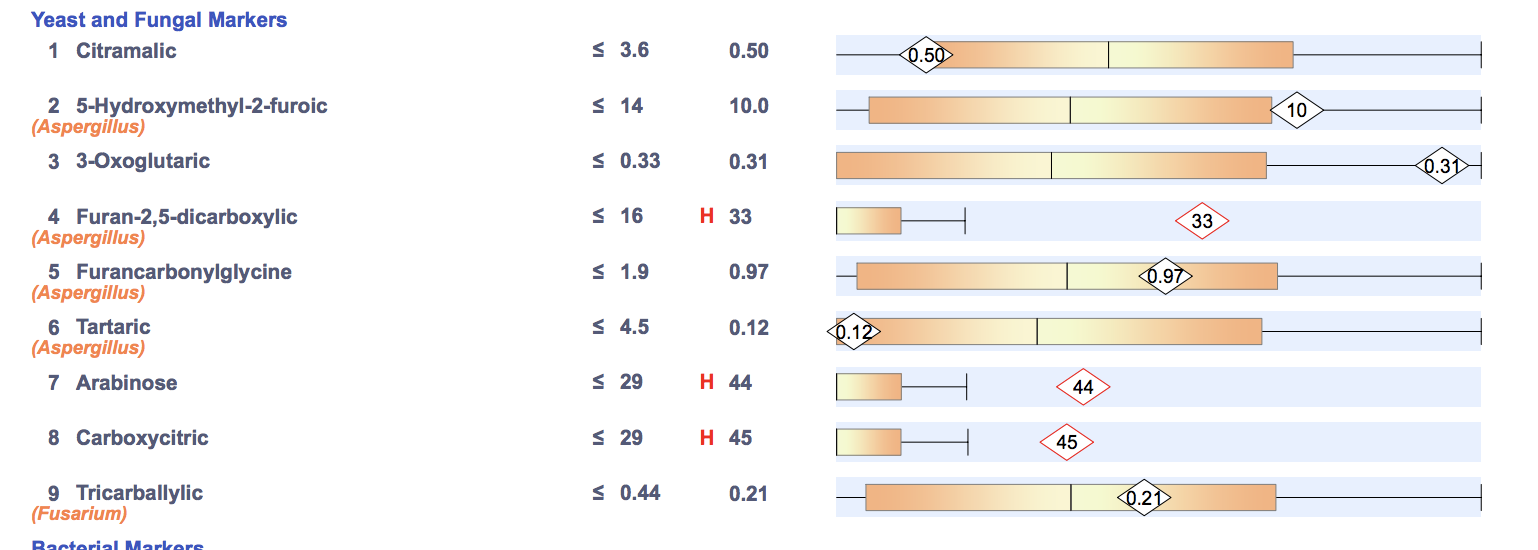
Back to candida overgrowths. Below we can see an elevation in arabinose, a marker of a fungal overgrowth. This is the marker I frequently see elevated. While it doesn’t specify candida it does indicate probable fungal overgrowths. From there we can work backwards to symptoms and history to really reinforce the possibility.

When I see an elevation in arabinose and carboxycitric acid like the image below it reinforces the fungal overgrowth theory.

I am sure you have picked up on the vagueness in my descriptions.
With OAT testing I find myself using words like possibility and fungal overgrowth rather than the specific species. This is because the OAT test won’t tell you exactly what microbe you are dealing with.
At first I considered this a major issue and disregarded OAT testing as an option. Now I have come to see it as one of the most insightful tests on the market.
Here is why.
Organic acids testing results will give us an insight into how the body is compensating due to a fungal overgrowth. These include oxalate load, mitochondrial function, neurotransmitter imbalances, detox pathways and even certain nutrient deficiencies.
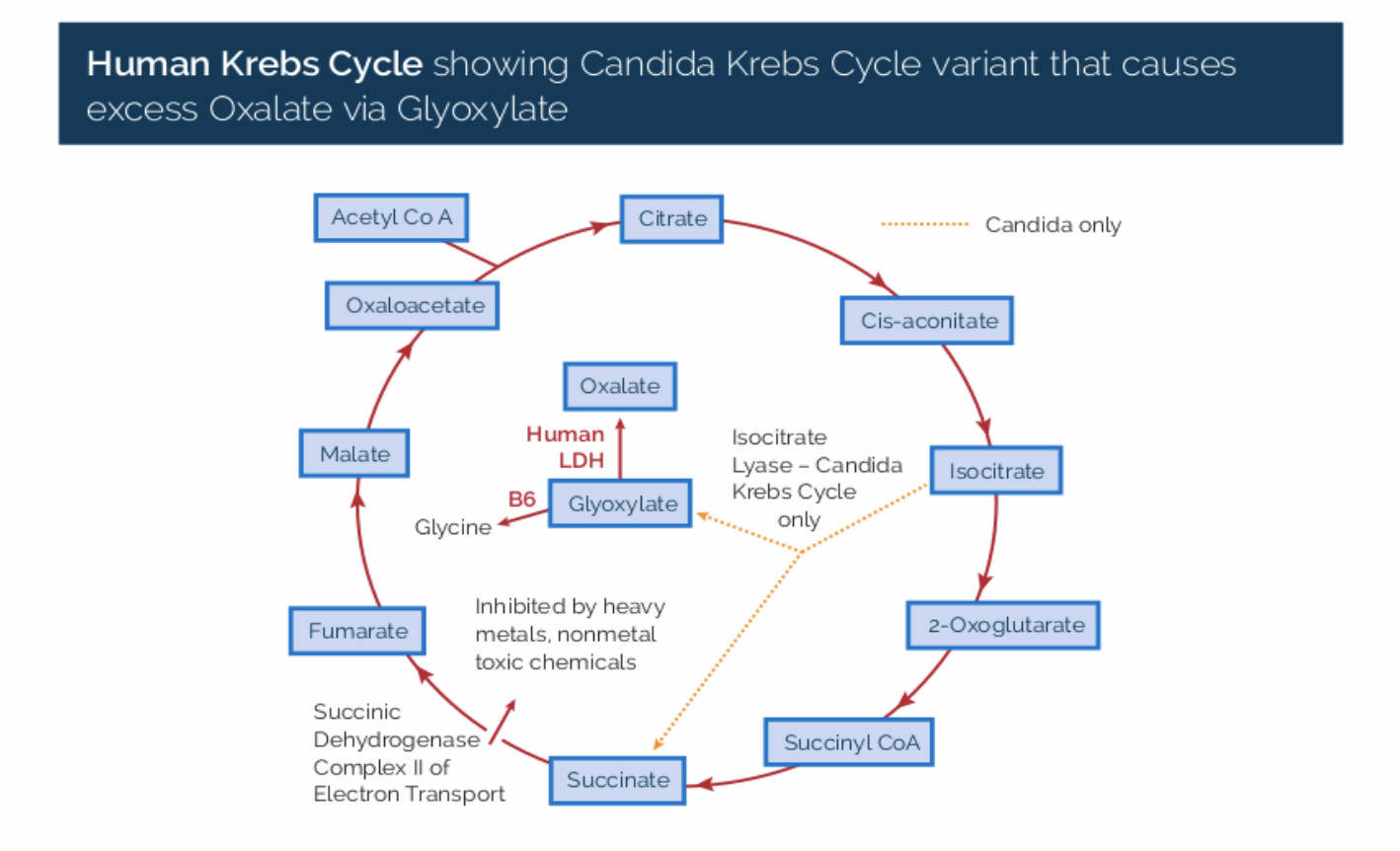
Excessive oxalate production is often a consequence of a fungal infection or overgrowth as seen in the test result below.

Candida has the ability to drive excessive oxalate production via the isocitrate lyase enzyme which hijacks isocitrate in the human krebs cycle, converting it to glyoxylate and then on to (extra!) oxalates.
Here is why we see joint pain and muscle soreness as a consequence of a candida overgrowth. The oxalate load, causing these symptoms, is merely a consequence of the fungal overgrowth!
So with the example above we know there is a fungal overgrowth and that the oxalate load is extreme. Treatments for this patient included lowering her oxalate intake from her diet, citrate based minerals to bind and detox oxalates and finally, antifungal herbs.
The Organic Acids Test (OAT) is my preferred option for detecting fungal overgrowths. While it doesn’t identify the exact species, it reliably picks up markers of Candida and shows how the body is coping with the overgrowth.
Candida Testing Compared: A Case Study in Finding Hidden Fungal Overgrowth
To really illustrate the value of the OAT test I want to share a case study from a patient of mine using the three testing options listed above.
She came to me with stool test results from the Complete Microbiome Mapping test from Nutripath. These results showed zero candida. Not her issue right?

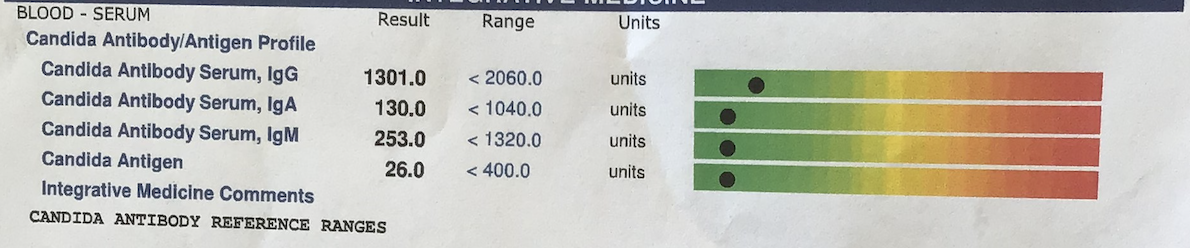
From her symptoms and her intuition that there was a fungal issue going on the serum candida antibody test was ordered. Here we see a mild elevation in IgG but nothing to be concerned about.
As her treatment unfolded and our suspicion of some fungal overgrowth persisted, I recommended the Great Plains Organic Acid test currently my top choice for OAT testing. Here we see clear markers for aspergillus and candida.
After two false negative tests it turns out this patient was mould/fungi affected after all!
Why Testing for Candida Matters: Getting Clear Answers Before Starting Treatment
Over the years, I’ve gone back and forth between testing and relying purely on clinical signs. Part of the hesitation was that no single test is perfect, and in the early days, results didn’t always change how I approached treatment.
That changed once I really learned how to interpret the Organic Acids Test (OAT). It’s a complex tool, I often joke with patients that you need three degrees to fully understand everything it reveals, but it’s been worth the effort. Beyond just identifying fungal overgrowth, the OAT provides a window into how the body is coping: mitochondrial health, oxalate load, detox pathways, and more.
Since bringing the OAT test into my regular practice, I’ve found Candida overgrowths that would have been easy to miss with stool tests or symptom-based guesses alone. It’s not about chasing perfect numbers, it’s about getting a clearer view of the root cause and using that information to build a more targeted, effective plan for recovery.
Once you have testing confirming Candida is your issue then you have to get to work treating. I’ve included a few top articles on that below
No single test is perfect for diagnosing Candida, but some offer clearer answers than others. In my experience, stool and blood tests often miss what the Organic Acids Test (OAT) can reveal. By looking deeper into how the body is responding to overgrowth, we can move beyond guesswork and build a more targeted, root-cause approach to healing.


16 comments
Such a great explanation, Todd! Wonderful insights.
Thanks Sarah! You are too kind :-)
What about bioresonance tests that use your DNA sample like saliva, hair & nail? I’ve seen it show parasites, mold, candida & other toxins in body while stool and OAT tests don’t.
Great input! I like to use published and peer reviewed science to help guide my approach. I haven’t done a deep dive on bioresonance but don’t believe there has been much published on its use (happy to be wrong there!).
That isn’t to say there is no value in that approach. The end goal is feeling better, whichever route gets you there that doesn’t cause harm I’m all for.
Very interesting. My 24 year old daughter has been dealing with non stop digestive issues for four months. She experienced similar issues in 2018 which disappeared after two months (multiple tests did not find a cause). We live in the United States. What is the best type of professional to see who can test for candida? All of the symptoms you mentioned she is experiencing.
Hi Vicki, I would recommend seeing a good functional medicine practitioner or naturopath/herbalist. Often the best are naturopath/herbalists that work in functional medicine too.
I have seen one practitioner in particular talk about immunoglobulins in SIBO treatment (not first live treatment) but for challenging cases. There are a few studies on it. Do you have experience with utilizing immunoglobulins.
Hi! I am doing research on behalf of my 14 year old daughter. About two years ago, she came down with a rash…head to toe. We tried everything until a functional dr. asked to also look at her tongue…. coated in white. Candida was blamed. She went on a two week diet to eliminate all forms of sugar, took antifungals and probiotics, and it went away… or at least we thought. The last two years she has gained weight like crazy and has been super tired a lot. Even with trying to eat healthy and swimming several days a week, she was still struggling. I had blood tests done and now we find out her thyroid is out of wack and has been diagnosed with Hashimoto’s (which does run in my husband’s family). Have you had experience with the candida/hashimoto’s connection? I am wanting to have her tested for Candida but not sure which test would be best. Any thoughts?
Yup I have seen fungal overgrowths impact the thyroid in at least 3 patients. There could be an fungal/oxalate connection here or possibly leaky gut leading to an overactive immune imbalance. I frequently recommend the OAT test from Great Plains as a first test for more complex cases. It is hard to interpret for beginners but SO darn helpful in many patients cases.
Hi Todd,
Would the Organic Acids Test detect Candida Krusei (Pichia Kudriavzevii)?
And what specialized test could find out which specific Candida type is detected with the OAT?
thanks in Advance
Hi! I was wondering what you think about a GI MAP test showing no candida but the OAT markers being elevated? Thank you for your help!
Hi Todd,
How does one go about getting the OAT test?
TIA
Aletha Stone
Most qualified practitioners will have access to these labs direct from the pathology labs like great plains
Hi Tod
Do you treat Candida with anti-fungal medication like fluconazole or such other?
if so would it be ok to take a dose for a few days given they are available over the counter,
understanding this is not considered medical advice.
So would an OAT be able to distinguish between a systemic Candida infection and mitochondrial dysfunction? I started detoxing unexpectedly several months ago due to a single dietary change, and at first I thought it was due to a buildup of metabolic waste. More recently I’ve come to suspect that it’s Candida, and knowing which it is (or neither) would help me decide how to proceed from here.
Hi, I woud so LOVE for the OAT test to be able to tell me that there’s a fungal overgrowth. However, many things can elevate these markers, I’m curious as to why you’re so sure that they’re specific to an internal overgrowth?
It could also be due to food intake (presence of the acid in food or presence of mold on the food that produces the acid) or issues with Krebs cycle metabolism (PMID: 31114480), some other sources are:
Citramalic: Apples, cranberries, sugar beets.
Arabinose: apples, plums, cherries, and grapes.
Tartaric: Wine/grapes, chocolate, food additive/preservative
In the example you gave, you said Aspergillus was high due to the furan, but the other aspergillus markers were normal and low, indicating something else was elevating the aspergillus, right?