
Histamine intolerance is something I see in clinic every week — often in patients with bloating, sinus congestion, headaches, or odd food reactions that don’t quite add up.
While many people think of histamine as just a “food issue,” the truth is that histamine metabolism is deeply connected to your gut health, enzyme function, and microbiome balance. If your body struggles to break histamine down properly, it can build up and cause a wide range of systemic symptoms, especially digestive ones.
In this article, we’ll cover:
This is your starting point. A practical, clinic-informed guide to understanding histamine intolerance and its deep ties to the gut. Bookmark it as your reference as we dive deeper into herbal treatment, nervous system support, and root cause testing in upcoming articles.

Histamine Explained: What It Does in the Body
Histamine is a biogenic amine — a naturally occurring compound made from the amino acid histidine. It plays a crucial role in immune regulation, digestion, circulation, and neurotransmission.
Histamine was first identified in 1910 and, by 1932, was recognised as a key mediator in allergic and anaphylactic reactions. It’s produced by several types of cells throughout the body, including mast cells, basophils, platelets, histaminergic neurons, and enterochromaffin cells — all of which have different roles depending on where they’re located in the body (1).
In small amounts, histamine is essential. But when levels build up, whether from food, immune triggers, or poor clearance, symptoms can develop.
Key actions of histamine in the body include:
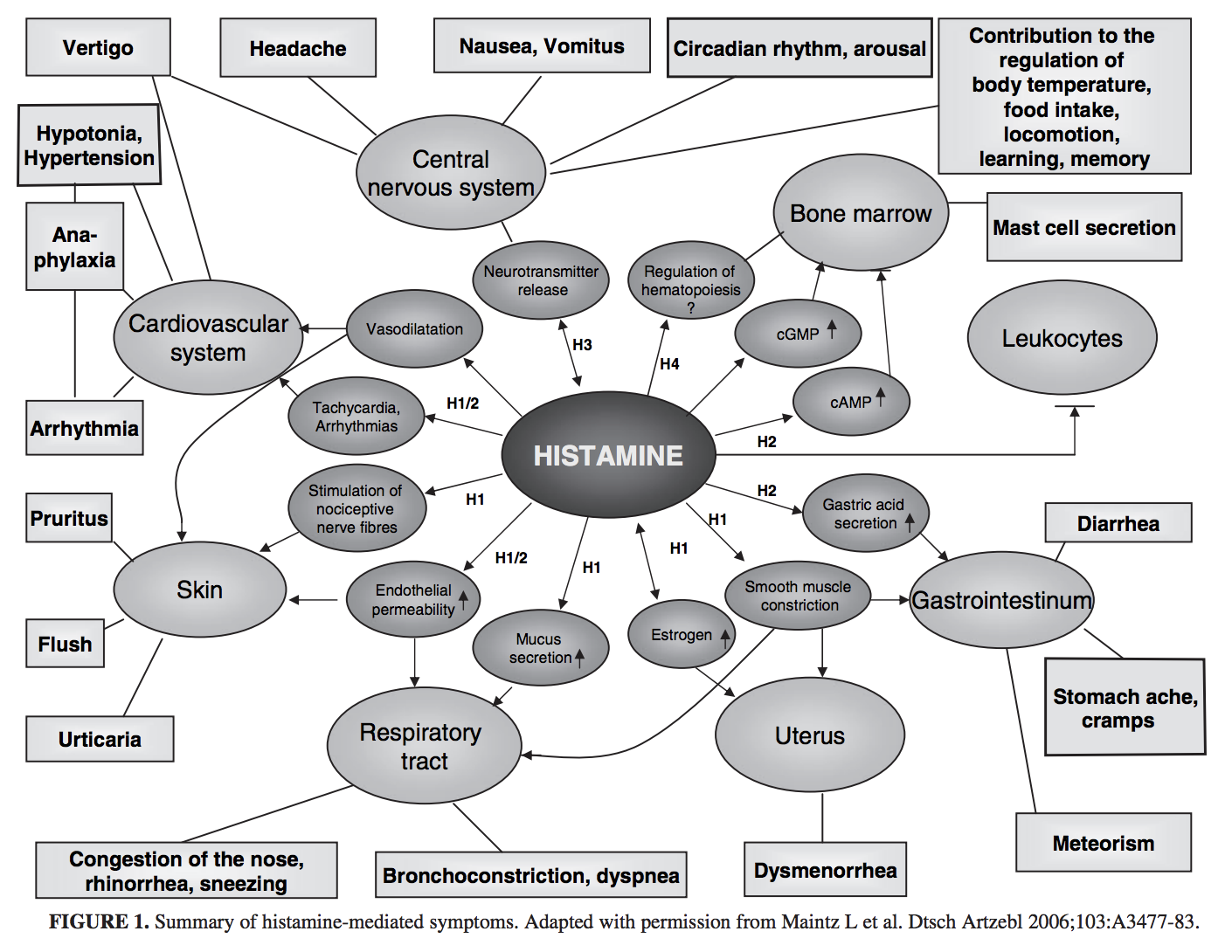
How the Body Breaks Down Histamine
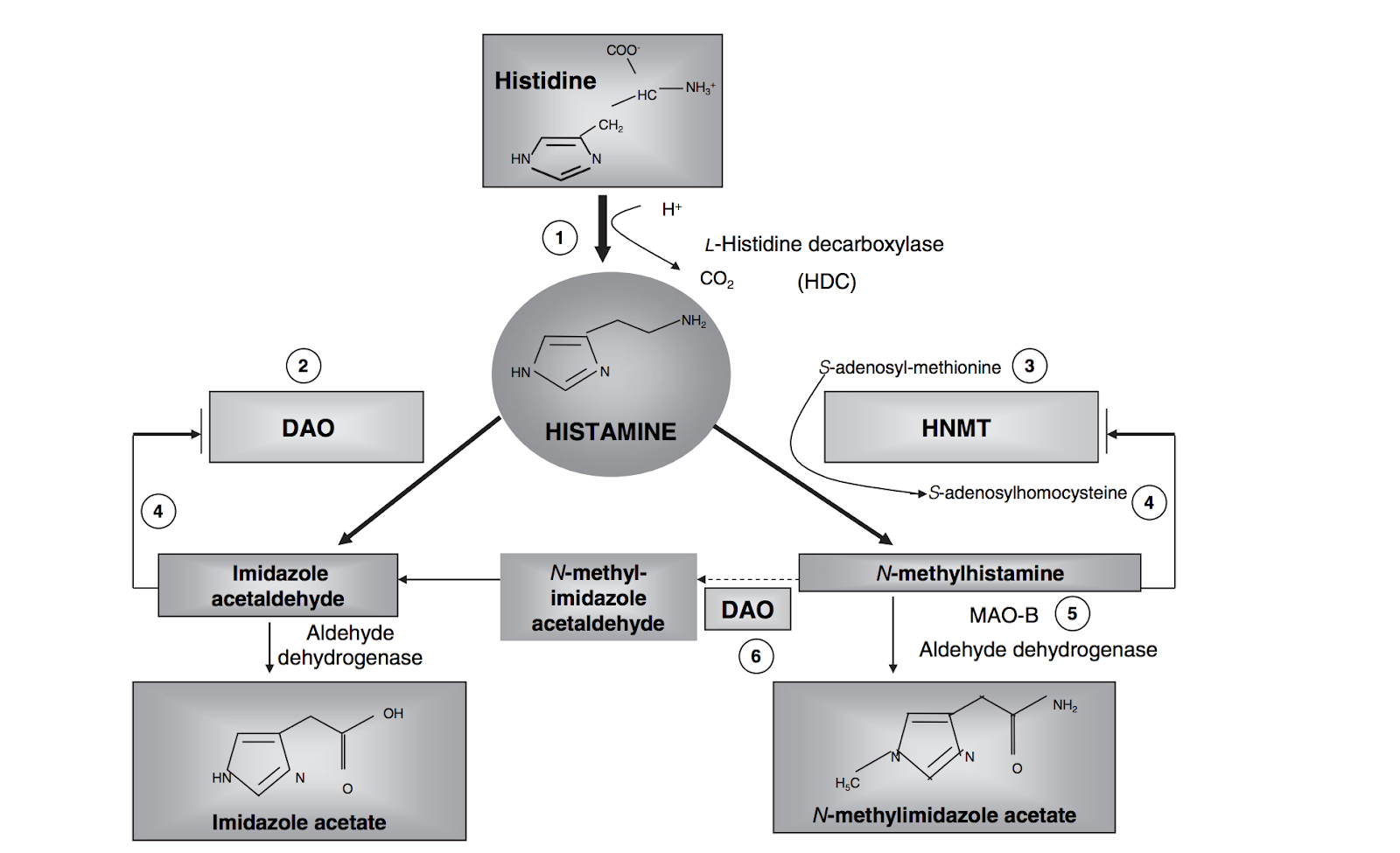
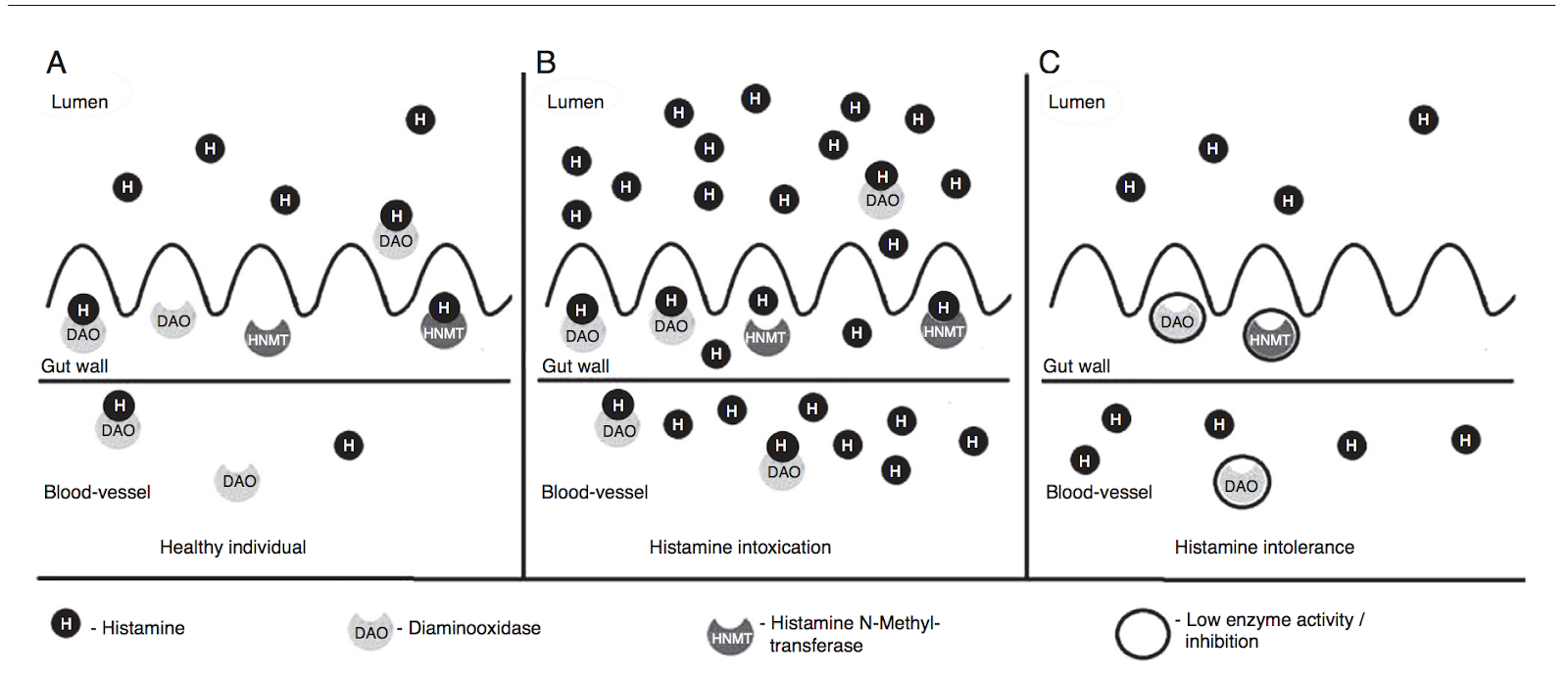
The body relies on two key enzymes to break down histamine: diamine oxidase (DAO) and histamine-N-methyltransferase (HNMT). Each works in different tissues and plays a specific role in keeping histamine levels in check. When these enzymes are impaired or overwhelmed, histamine can build up and cause symptoms.
DAO: The gut-based enzyme that breaks down food histamine
DAO is produced in the epithelial cells that line the small intestine and the colon and is released into the gut lumen and bloodstream where it breaks down histamine that it encounters. Think about it like a histamine scavenger.
According to the review by Maintz and Novak, DAO activity is often reduced in digestive conditions like Crohn’s disease, ulcerative colitis, coeliac disease, allergic enteropathy, and colorectal cancer. When the gut lining is damaged, less DAO is produced, making it harder to break down food-based histamine before it enters circulation (1).
DAO acts as a frontline defence against dietary histamine overload. When this defence is down, even small amounts of histamine from food can begin to accumulate in the system — filling what I often describe in clinic as your “histamine bucket.”
DAO at a Glance
Diamine oxidase (DAO) is the main enzyme responsible for breaking down histamine from food. It’s produced in the lining of the small intestine and colon, and secreted into the gut and bloodstream.
DAO activity is often reduced in gut conditions like coeliac disease, IBD, and food allergies, making histamine harder to clear and when DAO is low, even healthy foods can trigger symptoms because histamine isn’t being broken down properly.
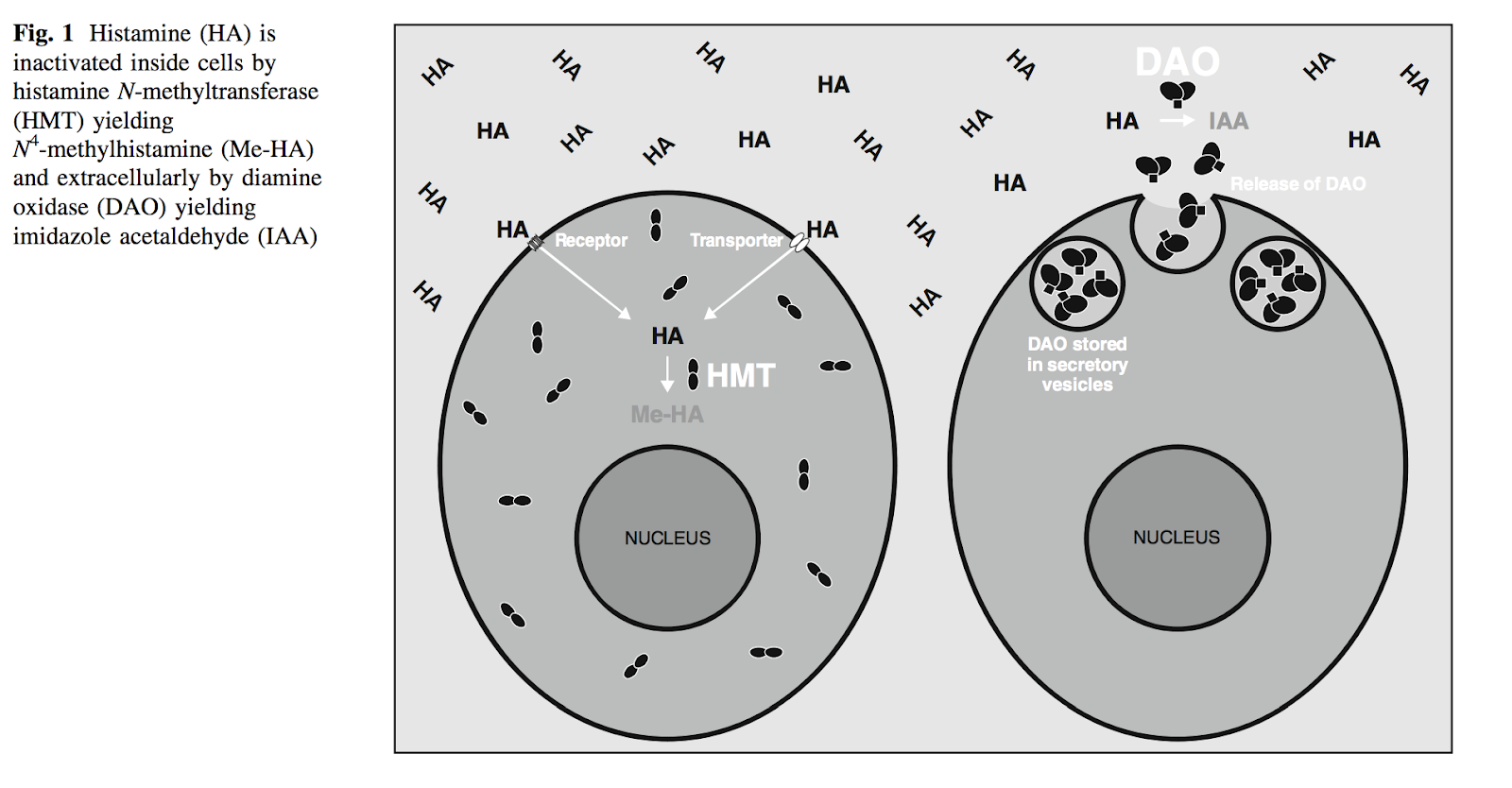
HNMT: The enzyme that breaks down histamine inside your cells
HNMT works inside cells, particularly in the liver, kidneys, lungs, and central nervous system. Instead of breaking down histamine from food, HNMT is responsible for inactivating histamine that’s already inside the body. It does this by transferring a methyl group from SAMe (S-adenosylmethionine), converting histamine into N-methylhistamine, a form that can be safely eliminated (1).
That might be too much info for some so simply think about this as the enzyme that breaks down histamine inside the cell.
This intracellular process depends heavily on your body’s methylation capacity. If you’re under-methylating (think genetics, nutrient deficiencies, or chronic stress) HNMT may not function properly, even if your gut is in good shape!
DAO and HNMT work together to maintain balance. If either one becomes compromised, your histamine bucket fills faster than it can be emptied. That’s when symptoms can build.
HNMT at a Glance
Histamine-N-methyltransferase (HNMT) breaks down histamine inside your cells — especially in the liver, brain, lungs, and kidneys. HNMT requires methylation to function, using SAMe to deactivate histamine.
Poor methylation (due to stress, nutrient depletion, or genetic factors) can reduce HNMT activity and contribute to histamine overload.
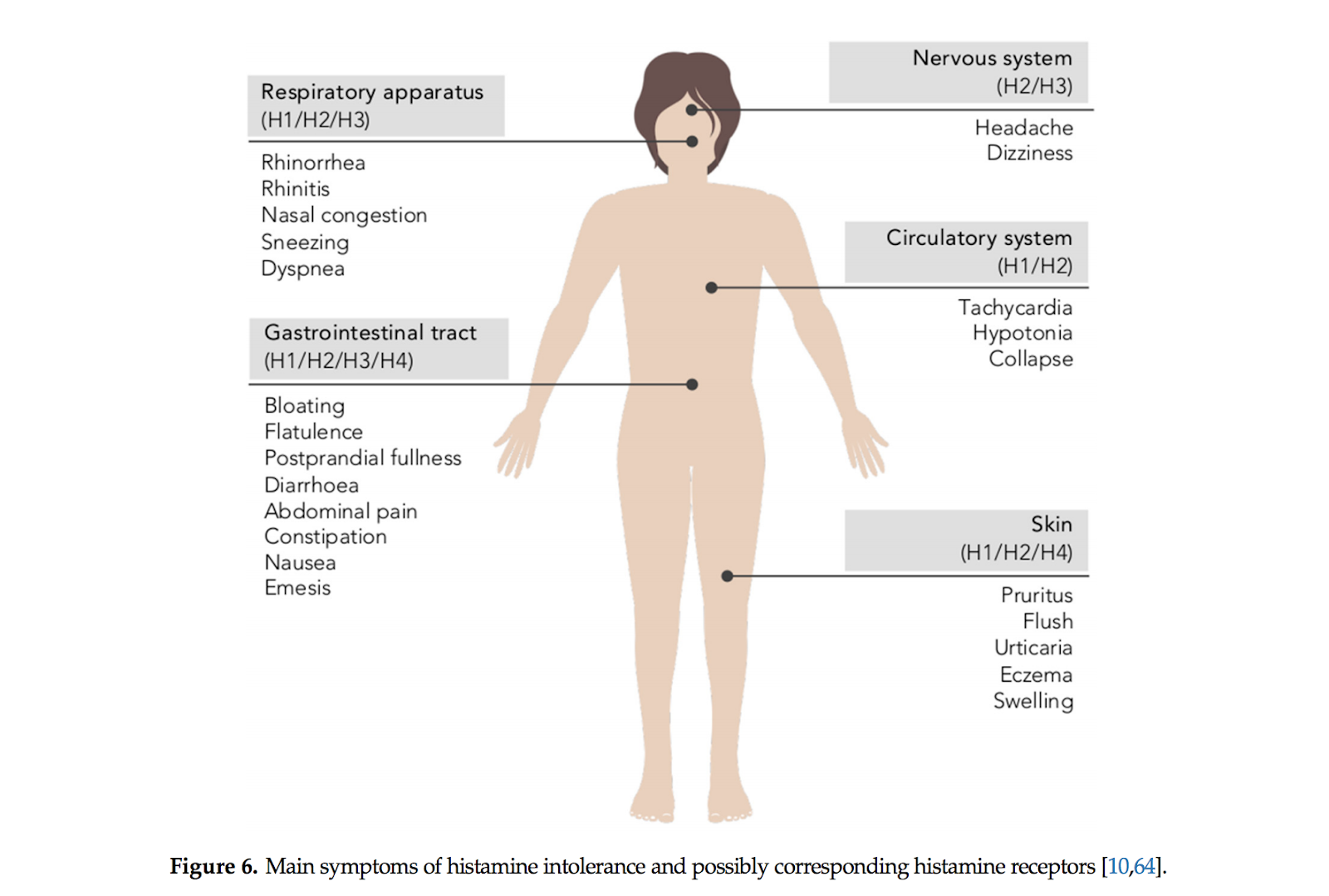
How to Recognise Histamine Intolerance: Common Symptoms and Clinical Clues
Histamine intolerance presents in a wide range of symptoms — some well documented in the literature, others frequently seen in clinical practice but not formally recognised in standard lists.
Research-backed histamine symptoms
Histamine excess can affect nearly every system in the body (1). Confirmed symptoms include:
These symptoms occur because histamine acts on blood vessels, nerve endings, smooth muscle, and immune cells throughout the body.
Clinically observed histamine symptoms
In the clinic I also often see additional symptoms reported consistently by patients with suspected histamine intolerance:
What Causes Histamine Intolerance? Understanding the Two Main Drivers
Histamine intolerance isn’t usually caused by just one thing. Instead, it often develops when there’s either too much histamine coming in or not enough being broken down — and in many cases, both are at play.
Maintz and Novak describe histamine intolerance as a result of an imbalance between histamine accumulation and histamine degradation, with symptoms arising once this threshold is crossed.¹
1. Increased histamine load
This includes high intake of histamine-rich or histamine-liberating foods, such as:
Beyond diet, internal histamine production may also rise due to:
Biofilms can contribute to chronic gut inflammation, which may worsen histamine intolerance by stressing the immune system and disrupting the gut lining. Learn how biofilms protect microbes and what you can do about them.
2. Impaired histamine breakdown
Histamine degradation depends on DAO and HNMT enzyme activity. When these enzymes are downregulated or overwhelmed, histamine builds up.
DAO may be reduced due to:
HNMT activity may be compromised in people with:
- Chronic toxic or metabolic stress
- Poor methylation capacity
- Nutrient deficiencies (e.g., B12, folate, SAMe)
In clinic, I often find both drivers, high histamine exposure and low breakdown, are contributing to the picture. This is why single-focus interventions (like avoiding sauerkraut or taking DAO alone) don’t always bring full relief.
What Causes Histamine Intolerance?
Histamine intolerance is driven by two core issues: too much histamine in the system and not enough enzymatic clearance.
High intake of histamine-rich foods, alcohol, or gut-derived histamine can overwhelm the system, especially if DAO or HNMT enzymes are under-functioning. DAO may be reduced by gut inflammation, coeliac disease, IBD, or food allergies, while HNMT depends on healthy methylation.
Most people with significant histamine intolerance experience both increased histamine load and impaired breakdown
The Gut-Histamine Link: How Digestive Issues Worsen Intolerance
Histamine overload often shows up as digestive symptoms — things like colic, flatulence, diarrhoea, and abdominal pain¹. These can easily be mistaken for general food intolerance or IBS, but in many cases, histamine is a key player.
On top of that, gut conditions like Crohn’s disease, ulcerative colitis, allergic enteropathy, food allergies, and colorectal cancer have all been linked to reduced levels of diamine oxidase (DAO), the gut enzyme that breaks down histamine¹. This means patients are not only dealing with more histamine but less capacity to clear it.
Other symptoms like bloating, cramping, and reflux may also be related to histamine’s effects on smooth muscle and gut permeability (2).
Histamine Degrading Enzymes and the Gut
So we have covered the enzyme diamine oxidase (DAO) which is mainly produced in the small intestine in the intestinal villi (3). It should come as no surprise that histamine intolerance is common in conditions where the villi is damaged and DAO is not being generated in abundance. If the villi are where the enzyme is made and they have been damaged then less of the enzyme will be made.
I’ve found histamine intolerance to be incredibly common in SIBO cases as a great example of this.
A small study found that patients that found benefit from a low-histamine diet had low levels of DAO and that, once supplemented, this enzyme improved their symptoms (4). I think about DAO as the frontline defence against high histamine food. It catches and breaks down this biogenic amine before it makes it into systemic circulation.
An interesting point here is that a low histamine diet in histamine intolerant patients actually raised suboptimal levels of DAO showing that avoiding histamine not only improves symptoms, it can address one of the root causes as well (5).
But low DAO is just one part of the complex puzzle involved in histamine intolerance and the gut.
Histamine N-methyltransferase is the second enzyme we have covered. This particular enzyme is responsible for histamine breakdown in the cells. As you may have guessed, methylation is at the core of how this enzyme functions using a methyl donor from SAMe to break down histamine (6).
Don’t worry this won’t end up in a deep dive into methylation but it is important to pick this out, especially if you know you are a poor methylator and are suffering from histamine intolerance with no known root cause.
The Gut Balance and Histamine Intolerance
I’m not talking about specific probiotic strains here, because I don’t believe we’re at a point where we can confidently say, “this strain produces histamine, so it should always be avoided.” In practice, I’ve found that probiotic tolerance is highly individual.
Even if a certain strain has been flagged for histamine production, its overall effects in the gut, from antimicrobial action and mucosal repair to immune modulation, may still be beneficial. So rather than avoiding probiotics altogether, I suggest paying close attention to your individual response.
What I find more clinically useful is looking at overall gut microbial balance in histamine intolerant patients, rather than focusing too narrowly on isolated strains.
One interesting study found that histamine intolerant patients had elevated levels of zonulin, a marker of leaky gut found that can be tested for with The Complete Microbiome Mapping test. They also found increased levels of Proteobacteria, a pro-inflammatory and less-than-friendly group of bacteria, and reduced diversity (a major marker of imbalance). Finally they found low levels of Bifidobacteria in histamine intolerant people compared to healthy controls (7).
Managing Histamine Intolerance: First Steps and Diet Trial
When someone comes to me with ongoing gut symptoms, histamine intolerance is always high on my clinical checklist. It’s often overlooked — but can be a major driver of bloating, food reactions, skin flare-ups, and more.
The process of assessing histamine intolerance typically starts with symptoms, then moves to relevant lab testing (see more here as histamine testing can be an absolute minefield!), and, if needed, a short-term low histamine diet trial for around 2–4 weeks.
Unlike other therapeutic diets, this one’s a bit more strict — at least in the testing phase. I’m usually all for the 80:20 rule, but when it comes to evaluating histamine as a root cause, you need to go as low histamine as realistically possible. You won’t get to zero — and you don’t need to — but the goal is to reduce histamine intake enough that we can observe whether symptoms shift. If they do, that’s a strong clue.
That’s all for now — but I’ll be diving deeper into this topic in future articles, including herbal strategies for histamine intolerance, how it ties into other gut and immune conditions that drive histamine intolerance like Candida, and possibly even a low histamine workbook to guide the process. Stay tuned.
Now over to you, if histamine intolerance has played a role in your health journey, feel free to share your experience in the comments below.
References and Resources
- Histamine and histamine intolerance
- Histamine, histamine intoxication and intolerance
- Histamine Intolerance: The Current State of the Art
- Serum diamine oxidase activity in patients with histamine intolerance
- Serum diamine oxidase activity as a diagnostic test for histamine intolerance
- Histamine intolerance and dietary management: A complete review
- Microbial patterns in patients with histamine intolerance


12 comments
Hi I believe I am suffering from histamine intolerance caused from an antidepressant that I am trying to taper off, as I am learning now this medication also acts as an antihistamine, my symptoms range from heart palpitations and arrhythmia itching, my skin producing heaps of oil,muscle twitches and low mood and anxiety also my menses have been of track last couple of
months. Could you please help me on what would be the best steps for me to take I want to get my health back.
Hi Ashlee, thanks for your comment. I can’t offer any specific advice but wanted to mention that histamine and serotonin are both processed through the same detox enzyme. That could be the connection between histamine reactions and antidepressants.
Hi my name is Elizabeth.
I think I have a histamine influence, after I was eating to much home made yoghurt and fermented cabbage. Now I have rash hives in May skin.
I would like to ask can you help me please what kind of probiotik is good for histaim intolerance.
Thanks
How do you get rid of nasal polyps that are causing congestation, and breathing problems.
Had the polyps removed and they grew back in about 2 years.
Thank You very kindly
Do you have a counterpart or recommendation for somebody in The United States, specifically San Francisco Bay Area in California? Thanks.
Hi! Thanks so much for all of this information. Your site and youtube channel have helped me greatly (here in America).
I have been taking skullcap in tincture form for the past 2 days and I notice my nose is noticeably clearer. It’s a slow, subtle progression from when I take it to about 2 hours later. Really pleased! I found your channel researching SIBO and discovered that I likely also had histamine intolerance. I have been trying to figure this out what is going on with my nose much of my adult life (I am in my early forties, so a long time!!)- seeing both regular and naturopathic doctors and no one was very helpful, or indicated that this could be an issue.
Thank you.
This is so enlightening, About 3 weeks ago I started with severe hives. I am desperate to cure this. I have stopped taking Endep ( antidepressant),eating now low histamine diet for the last 5 days,taking Quercetain which helped initially however i am taking 8 tablets per day it doesn’t help anymore, I am only taking Zyrtec to be able to get some sleep, initially one tablet per day, now 2 per day and it doesn’t seem enough. I am not bloated or having any stomach or bowel symptoms, no headaches. Is there anything else I should be doing or taking. I greatly appreciate any advice.
Hey Mita, if quercetin helped I’d look into your immune system and what might be triggering a reaction. Histamine intolerance can be an absolute minefield for some. I hope you get to the bottom of it!
My daughter has nuro issues with high anxiety and is set off by lots of things that promote methylation like vitamins Also sugar inositol and some other aminos. She take resperdone which block h1. But I was looking for ideas on natural cns h1 blockers
I’ve had trouble sleeping for years, developed ME a couple of years ago. Realised my digestion is very compromised and I’ve been eating kimchi and drinking kombucha daily – helped with digestion but now I have histamine intolerance, main symptom way terrible insomnia. From day 1 of a low histamine diet my sleep has improved greatly. I’m also taking DAO supplements
Hi Todd,
Thank you so much for all of your free content. I’m consuming in like a thirsty person drinking fresh spring water! I’ve also booked in for a consult in two weeks. I’m also a fellow Australian! Look forward to getting that extra layer of support through your private consults. For now… I’ll keep reading and applying your teachings!
Warmest,
Chloe
So glad its been helpful! Looking forward to connecting soon :-)