
If you’ve been diagnosed with SIBO, you’re probably familiar with the frustrating symptoms: bloating, food intolerances, constipation, or diarrhoea. But the deeper I go in clinic, the more I see it — SIBO often isn’t the root cause. It’s a symptom. Something upstream has gone wrong.
One of the biggest underlying issues? SIBO motility problems — when the natural movement of your gut slows down, allowing bacteria to overgrow where they shouldn’t.
In this article, we’ll explore the major reasons why motility breaks down and how this can set the stage for recurring SIBO and chronic digestive symptoms.
In this article we won’t be covering the basics of SIBO. If you need a refresher check out some of the links to past videos below.
How Poor Gut Motility Triggers SIBO
Gut motility is one of those things I find myself explaining every day in clinic. Whether it’s the migrating motor complex or the waves of peristalsis, healthy movement through the digestive tract is absolutely critical, and commonly overlooked when it comes to SIBO.
In fact, a breakdown in this natural rhythm is one of the most common root causes of SIBO I see.
This process of coordinated muscle contractions is controlled by your enteric nervous system, sometimes called your second brain. It’s what keeps things moving forward. But when the balance between your sympathetic (fight or flight) and parasympathetic (rest and digest) nervous systems is off, motility can slow right down (1).
In a fasted state, your migrating motor complex (MMC) kicks in to sweep the gut clean between meals. In a fed state, peristalsis takes over to move food through the system.
But this system is fragile. Nerve damage, inflammation, methane gas, past infections, and even chronic stress can all disrupt your gut’s motility. In some cases, things like thyroid issues, medications, adhesions, or even conditions like Ehlers-Danlos syndrome can play a role too.
While constipation and bloating are common signs of slowed motility, not everyone presents the same way. That’s why testing your gut transit time — the pace at which food moves through your system — can be incredibly helpful in guiding treatment. Probiotics can help here but need be tailored to SIBO patients wisely. More on probiotics for SIBO here.
Let’s unpack the most common issues I see slowing down motility and setting the stage for SIBO.
SIBO doesn’t usually happen out of nowhere. It’s often the result of a gut that’s stopped moving properly. When motility slows, food and bacteria hang around longer than they should, giving overgrowth a chance to take hold. Fixing that movement is one of the most important steps to long-term recovery
Inflammation and Gut Motility: The First Domino
One of the major disruptors of gut motility is inflammation. And in SIBO cases, that inflammation often starts with the bacterial overgrowth itself.
Many patients with SIBO show a small bowel microbiome dominated by gram-negative bacteria, especially strains like Klebsiella and Escherichia, both part of the Enterobacteriaceae family (2). These bacteria produce a potent endotoxin called lipopolysaccharide (LPS), which sets off a cascade of inflammation in the gut lining (3).
This is where things get messy. LPS triggers a strong immune response that can slow down gut movement — especially in the small intestine. That slow-down then allows more bacteria to stick around and multiply. It’s the first domino in the cycle of SIBO.
LPS and TNF-α: The Inflammation Breaks
Once inflammation is set in motion, things can spiral quickly. One of the key players in this process is lipopolysaccharide (LPS) — that endotoxin produced by certain gram-negative bacteria. When LPS enters the system, it triggers a release of tumour necrosis factor-alpha (TNF-α), a powerful inflammatory signal (4).
This inflammatory chain reaction has a direct effect on gut motility. TNF-α interacts with the dorsal vagal complex — a brainstem region involved in autonomic control — and puts the brakes on normal digestive rhythms. Specifically, it slows down the migrating motor complex (MMC), the housekeeping wave that clears bacteria from the small intestine between meals.
That’s why patients with high levels of gut inflammation often struggle with sluggish digestion, bloating, and bacterial overgrowth. The bacteria trigger inflammation, and the inflammation slows motility, giving the bacteria even more time to thrive.
‘The implication of these studies is that constant exposure to gram negative bacillary derived LPS can lead to a diminished migrating motor complex and stasis of luminal contents during the interdigestive period. This stasis then leads to overgrowth of colonic type flora in the small intestine.’
Pediatric Small Intestinal Bacterial Overgrowth in Low-Income Countries
Inflammation doesn’t just cause gut symptoms — it slows the whole system down. When bacterial toxins like LPS trigger inflammatory messengers like TNF-α, your gut’s natural motility gets switched off, paving the way for SIBO to take hold
Methane Gas: The Gut Slower
If you’ve ever dealt with methane SIBO, you already know the feeling — bloating, sluggish bowels, and constipation that just won’t budge. That’s because methane gas, produced by microbes like Methanobrevibacter smithii, has been shown to directly slow gut motility (6).
Early on, researchers thought methane showed up because motility was already slow. But newer studies are flipping that idea: methane might be the cause, not the consequence.
One of the mechanisms? Serotonin — a key neurotransmitter that helps keep your gut moving. In one small study, methane producers had lower post-meal serotonin levels, suggesting methane itself may interfere with this motility signal (7).
From a clinical lens, I’ve seen both sides: sometimes methane is the original problem, and other times it thrives because something else slowed the gut first. Either way, methane tends to lock things down — and it’s often at the centre of chronic constipation cases.
For a full breakdown of how I approach this type of case, check out my Methane SIBO treatment plan here or if you’re still stuck after multiple rounds of treatment then you might need a deeper approach in the advanced methane SIBO treatment article here.
Methane-producing microbes like Methanobrevibacter smithii can slow gut motility and drive constipation. In methane SIBO, this gas isn’t just a by-product, it’s often the reason your gut slows down in the first place.
How Chronic Stress Slows Gut Motility
Chronic stress and anxiety can seriously mess with your digestion — not just by triggering symptoms, but by disrupting gut motility at a deep nervous system level.
I used to overlook this myself, always hunting for some fancy biochemical mechanism. But the more I’ve worked with SIBO cases, the more I’ve seen just how important the nervous system is.
Let’s break it down.
The autonomic nervous system has three branches:
- The sympathetic system, which controls the “fight or flight” response
- The parasympathetic system, also known as “rest and digest”
- And the enteric nervous system, which directly governs digestion (1)
In times of stress — even subtle, ongoing stress like deadlines, traffic, or arguments — the sympathetic nervous system stays switched on. This downregulates the parasympathetic system, which is essential for healthy digestion, absorption, and motility.
The vagus nerve is the main player in this story. It makes up about 75% of the parasympathetic nervous system and connects the brain to the entire digestive tract (1). Over 80% of its activity is sensory, which means it helps the brain monitor inflammation, motility, and barrier integrity (8).
When you’re stuck in stress mode, vagal function gets suppressed. That can lead to disrupted gut motility, increased inflammation, and a weakened barrier (9, 10).
Even physical injuries like whiplash or head trauma can affect vagus nerve function and show up later as digestive symptoms.
Chronic stress and vagus nerve dysfunction are often overlooked root causes of SIBO. The nervous system controls gut motility through the parasympathetic and enteric branches, especially the vagus nerve. When stress is high or the vagus nerve is impaired, motility slows down, creating the perfect environment for bacterial overgrowth to thrive

How Food Poisoning Can Trigger SIBO via Motility Breakdown
AAn acute case of food poisoning can do more than just ruin your week — in some cases, it leaves behind lasting damage to the gut’s ability to move properly.
This is still an emerging area of research, but it’s one I watch closely in stubborn or relapsing SIBO cases.
I’ve seen multiple clients who previously had an “iron gut,” able to travel and eat anything. Then a bout of gastro — often from unfiltered water, travel, or a dodgy meal — triggers chronic bloating, distention, diarrhoea, or food sensitivities that never fully resolve.
This is new research coming down the pipe. Much of the data is in the early stages of being worked out but there appears to be a connection with a history of a bacterial food poisoning event and irritable bowel syndrome or SIBO (11).
When we look at IBS patients we can see an auto-immune like condition can occur after bacterial food poisoning events. Certain bacterial infections, common in food poisoning, secrete a very specific toxin called cytolethal distending toxin. This bacterial toxin then cross reacts with a protein found in the human digestive tract (hence the auto-immune like reaction = immune system targeting itself). One major function of vinculin is to help regulate gut motility (12).
In human studies we can see a significant increase of anti-vinculin and anti-cytolethal distending toxin antibodies in IBS patients (13).
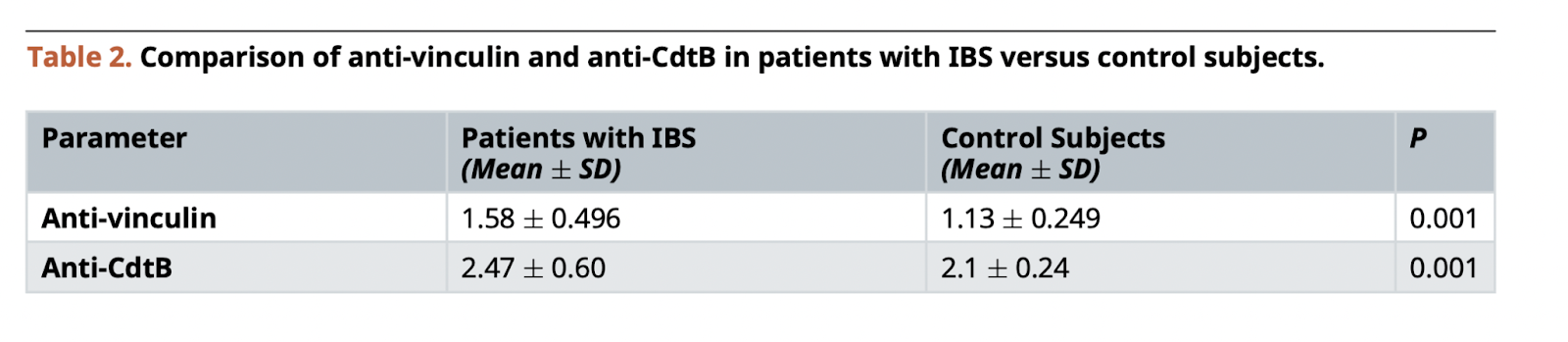
A large study found that anti-vinculin and anti-cytolethal distending toxin was higher in mixed and diarrhoea prone IBS but not constipation prone IBS (14).
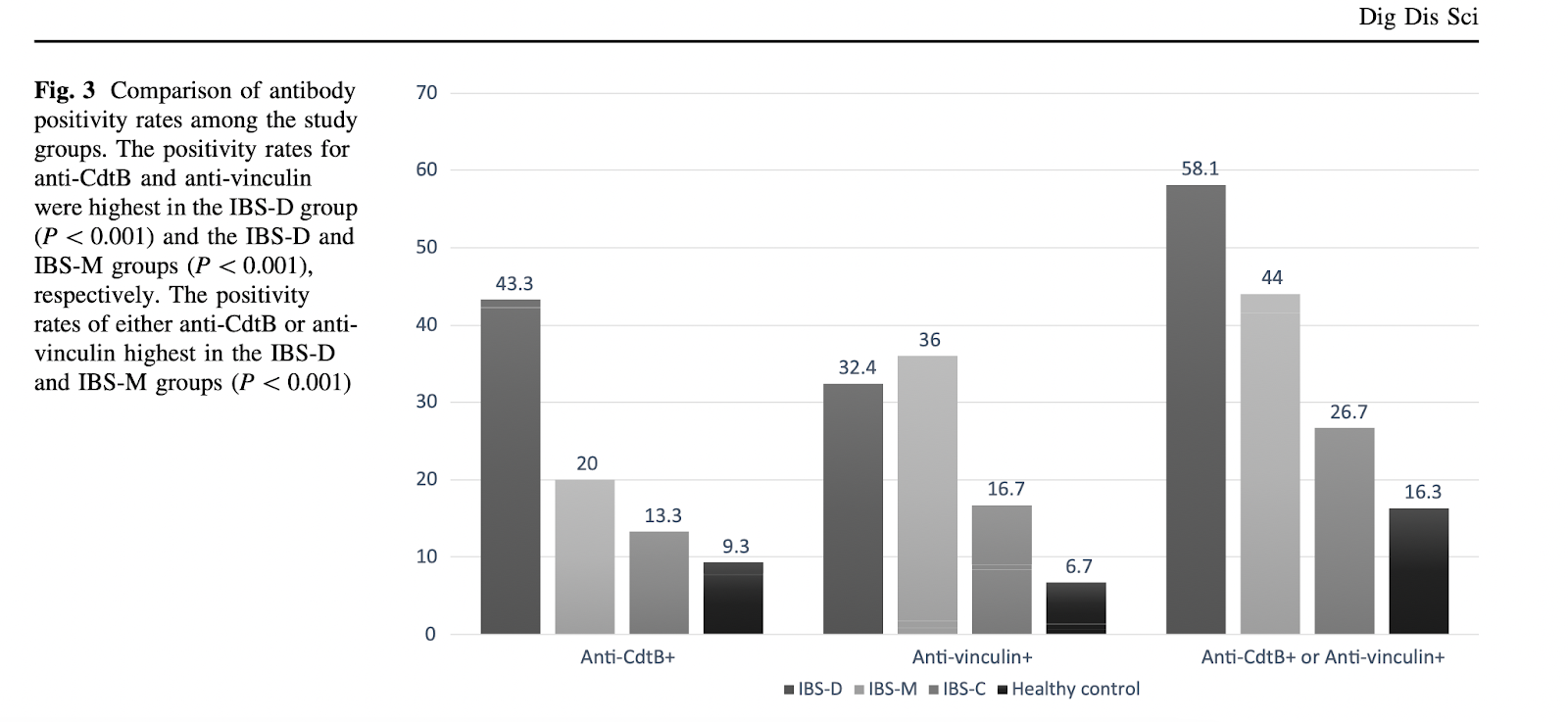
As vinculin plays a role in gut motility, immune mediated reduction in this particular protein can result in small intestinal bacterial overgrowth.
Bacterial food poisoning can trigger an autoimmune-like response that damages gut motility. This happens when the immune system mistakes gut proteins like vinculin for bacterial toxins — increasing the risk for SIBO and IBS long after the infection clears.
Improving Gut Motility to Prevent SIBO Relapse
We’ve covered four of the most common drivers of poor gut motility that can lead to SIBO — but there are others too. That’s why I view SIBO less as a root issue, and more as a symptom of deeper dysfunction.
Killing the overgrowth might bring short-term relief, but unless you address why the bacteria were able to flourish in the first place, relapse is common.
That’s why long-term resolution often depends on restoring healthy gut motility alongside targeted antimicrobial support.
In my clinic, every case is unique. While there are shared threads between clients, I always personalise herbal formulas to address both the symptoms and the root cause.
Curious about herbal medicines that support gut motility? Check out my in-depth breakdown of prokinetic herbs for SIBO recovery.
Final Thoughts on SIBO and Gut Motility
Understanding and improving gut motility is one of the most overlooked keys to resolving SIBO for good. It’s not just about clearing the overgrowth — it’s about rebuilding the rhythm and resilience of the gut so that overgrowth doesn’t return.
I’ve seen firsthand how powerful this shift can be when it’s built into a layered treatment approach. Whether it’s inflammation, methane production, stress, or a history of food poisoning — the better we get at identifying and treating the root cause of motility loss, the better long-term results we see.
If you’re dealing with SIBO symptoms that keep coming back, it may be time to look deeper into how your gut is (or isn’t) moving.

References & Resources
- Anatomy, Autonomic Nervous System
- The First Advanced Network Analysis of the Small Bowel Microbiome in Small Intestinal Bacterial Overgrowth (SIBO) Reveals That Escherichia and Klebsiella Are Disruptive to Network Integrity: Data From the REIMAGINE Study
- The blooming of Enterobacteriaceae, which contain these motifs, leads to a more selective pressure and shift toward an Enterobacteriaceae-dominated community
- Induction of endogenous tumor necrosis factor-α: suppression of centrally stimulated gastric motility
- Pediatric Small Intestinal Bacterial Overgrowth in Low-Income Countries
- Elevated methane levels in small intestinal bacterial overgrowth suggests delayed small bowel and colonic transit
- Methanogens, Methane and Gastrointestinal Motility
- Neural aspects of immunomodulation: Focus on the vagus nerve
- The Vagus Nerve at the Interface of the Microbiota-Gut-Brain Axis
- Vagal tone: effects on sensitivity, motility, and inflammation
- Post-infectious IBS, tropical sprue and small intestinal bacterial overgrowth: the missing link
- Study of Antibodies to Cytolethal Distending Toxin B (CdtB) and Antibodies to Vinculin in Patients with Irritable Bowel Syndrome
- Study of Antibodies to Cytolethal Distending Toxin B (CdtB) and Antibodies to Vinculin in Patients with Irritable Bowel Syndrome
- Assessment of Anti-vinculin and Anti-cytolethal Distending Toxin B Antibodies in Subtypes of Irritable Bowel Syndrome


9 comments
Hi, I live in Canada and am looking for the probiotic L. Reuteri DSM 17983… I can only find the brand Biogaia, do you know if this is a good one because I’m not stoked about the added ingredients ( xylitol,citric acid,palm oil..) or can you recommend one?🙏
Hi Kim, Go for the Biogaia drops instead by the same manufacturer. Much cleaner!
Hi Todd, thanks for the article. I’m curious about the post-infectious IBS piece; it seems to be predominantly affect people with IBS-D or M, so it’s somewhat counter-intuitive that this is a motility issue. Stuff is going too fast, you would think.
From what I can gather the lack of vinculin disrupts the MMC, which is then unable to clear the small intestines effectively, resulting in SIBO. Is that right?
Would addressing the motility in these patients with something like ginger or Iberogast work—would this not promote more diarrhea—or would you recommend something else, if not at a particular stage of treatment?
Hi Tim, great comments!
This is a common misunderstanding (if I am understanding your comment). You can have poor gut motility (peristalsis and MMC function) and still have chronic diarrhoea too. There is some overlap between prokinetics (gut motility agents) and laxatives (moving your bowels) on the herbal front but things like iberogast and ginger are not contraindicated in diarrhoea.
Best,
Todd
Hi Todd, I have histamine intolerance aka:SIBO. I also have IBS-C, again SIBO. I am getting a lot of information from your articles, however, what do you recommend to get rid of SIBO? What kills it? I’m 99% positive I have the Methane producing microbes.
Any thoughts on gastroparesis?
My 4 year old daughter has post infectious SIBO, and my question is whether her mmc will eventually go back to normal or is she going to struggle with this for life? I have struggled with SIBO for years and I really hope she isn’t destined to struggle for life. What herbs are suitable for a 4 year old to eradicate her SIBO and restore her motility? Do you treat patients virtually in Canada?
Hi Todd. Thank you for this and your other fantastic articles. Noticed an typo in this article while reading it.
“Compare this to the sympathetic nervous system which acts best in a rested, calm state also known as rest and digest”
Meant to be parasympathetic right?
well spotted! thanks for that Matt :-)